Lombok, Indonesia, Part 2: Island Tour
Having decided that surfing wasn’t going to be my next hobby (see previous post), I found a driver through Facbook, Hans, to take me inland to visit waterfalls, rice fields and villages for the day. Hans runs a trekking company offering overnight climbs of Mount Rinjani but when he’s not doing that, he offers island tours.
Hans picked me up at 9am and we cut through Lombok’s capital city of Mataram (population 400,000) where the pasar pagi, or morning market, was in full swing with people crowding around various vegetable stalls and food carts. A brisk business was being done at a satay stall and Hans, my driver, said the sate rembiga, a sweet but spicy beef satay, was the specialty of the region. He promised that we’d stop on our way back so I could sample some.
Lombok Waterfalls and Villages
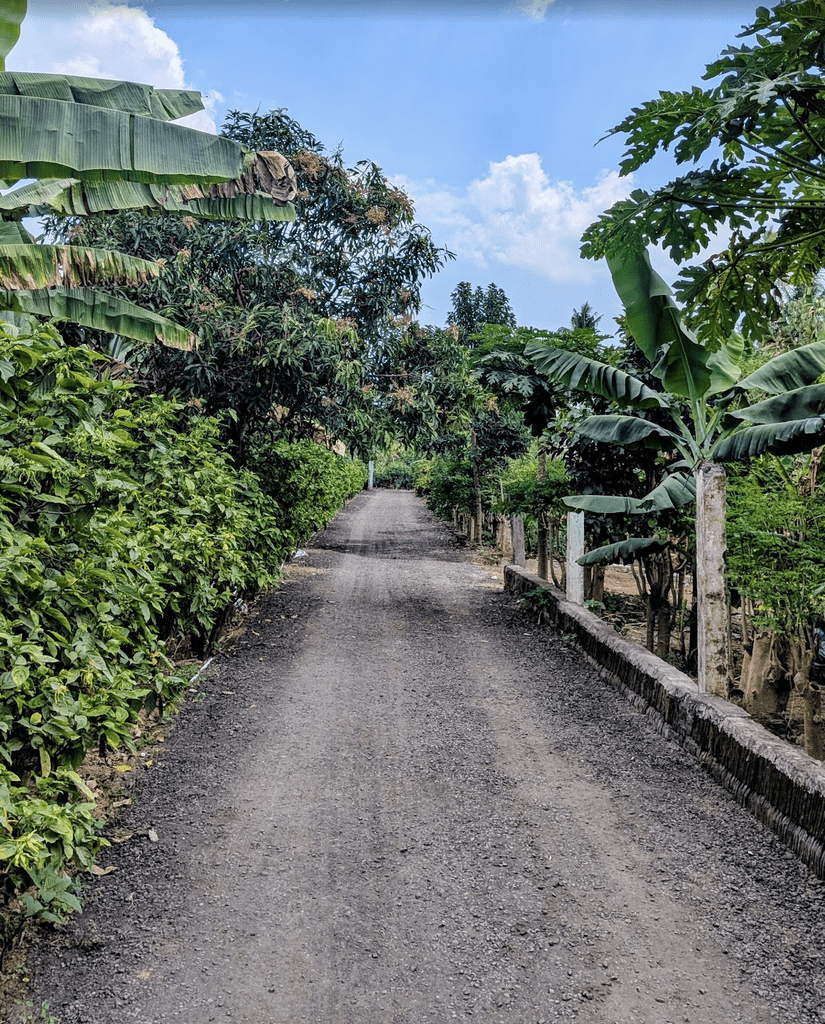
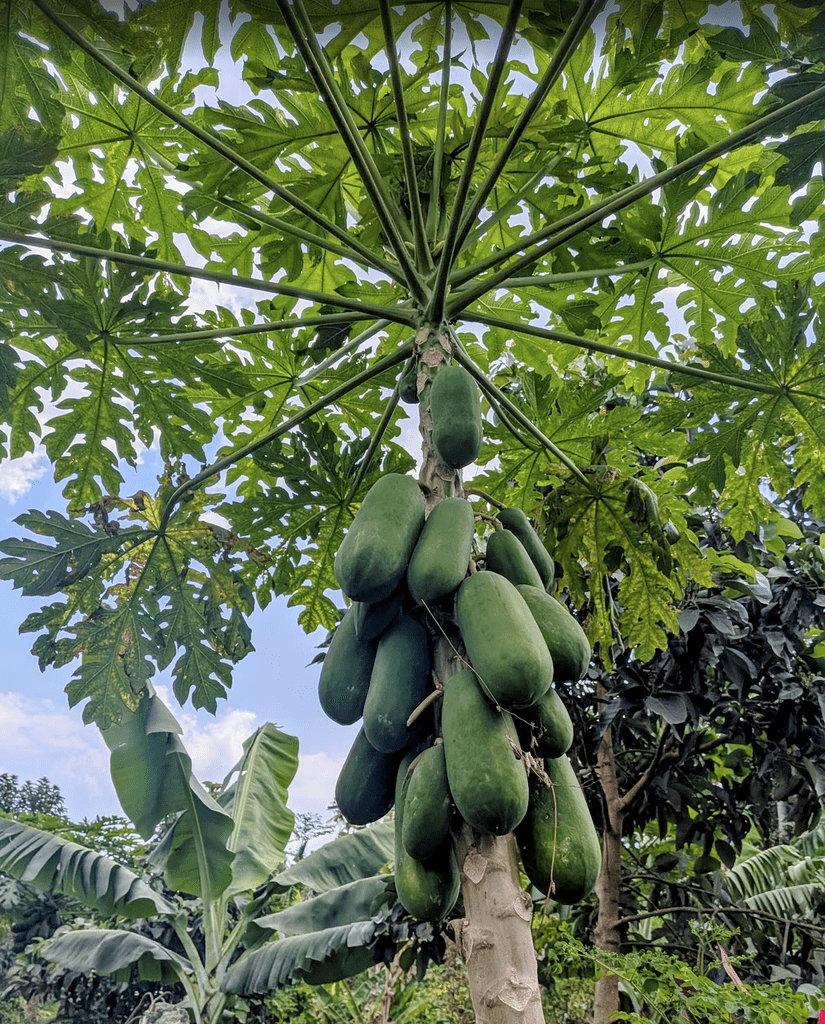
Mataram soon gave way to small towns and fields of green plants with large leaves – plants that I learned were tobacco. Evidently Lombok accounts for 30% of Indonesia’s tobacco cultivation, mainly grown in the dry season and those fields transitioning to rice production as the rainy season approaches. As we were headed up the slopes of Mount Rinjani, Indonesia’s second tallest volcano, the air got noticeably cooler and more humid and I started to see rice fields on the terraced slopes.
Benang Stokel and Benang Kelambu Waterfalls
About 20 noteworthy waterfalls are clustered in five areas surrounding Mount Rinjani. I didn’t see the volcano itself but I could definitely feel it in the moister and cooler air.
We went to Aik Berik Village, a rural community that boasts 5 waterfalls. Hans told me that the first 2 were the most impressive so I paid a local guide to take me to the Benang Stokel and Benang Kelambu waterfalls.
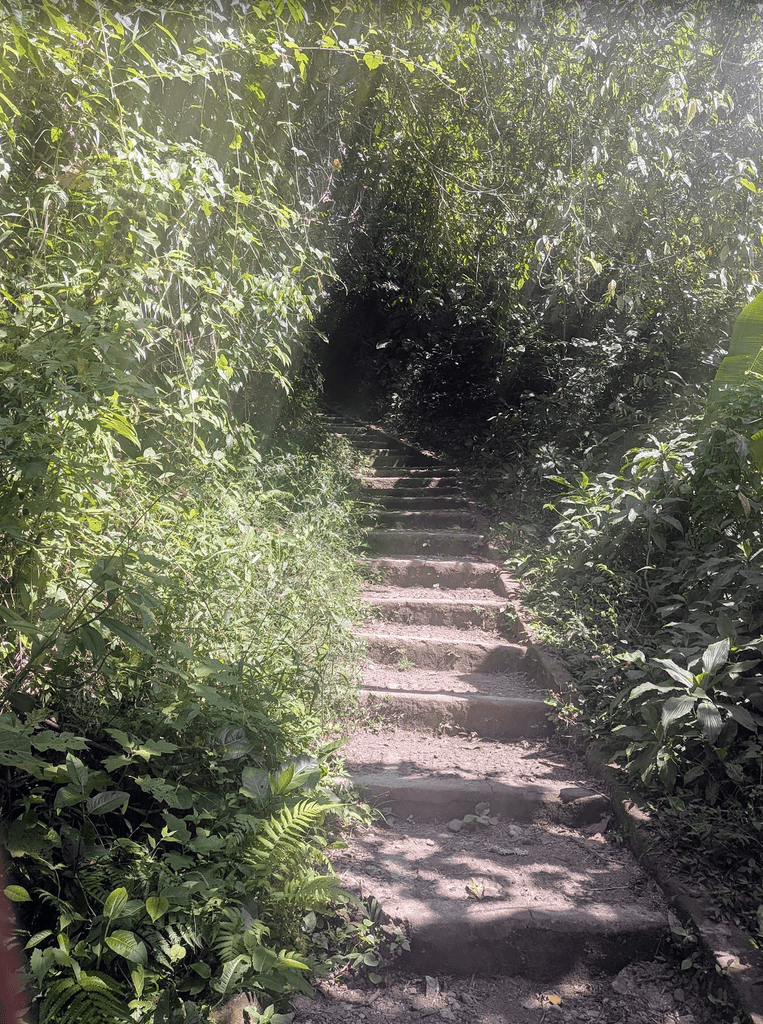
The path was surrounded by vegetation and in some areas, the path ran right on the side of the cliff. When the path was bathed in sunlight, the combination of the heat and the humidity was brutal. We walked about 15 minutes to the first waterfall, Benang Stokel ready to cool off.
Benang Stokel
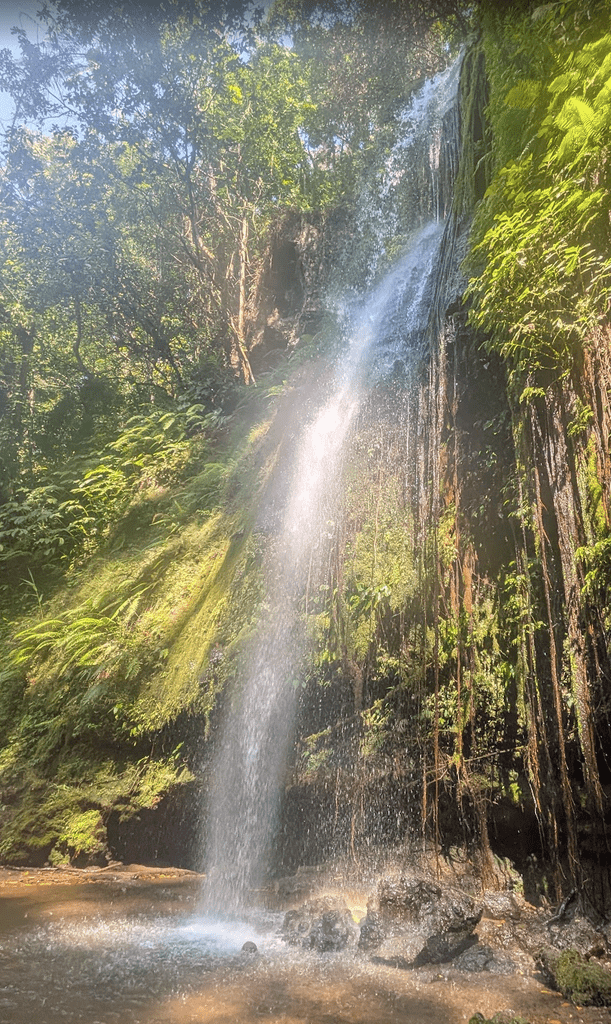
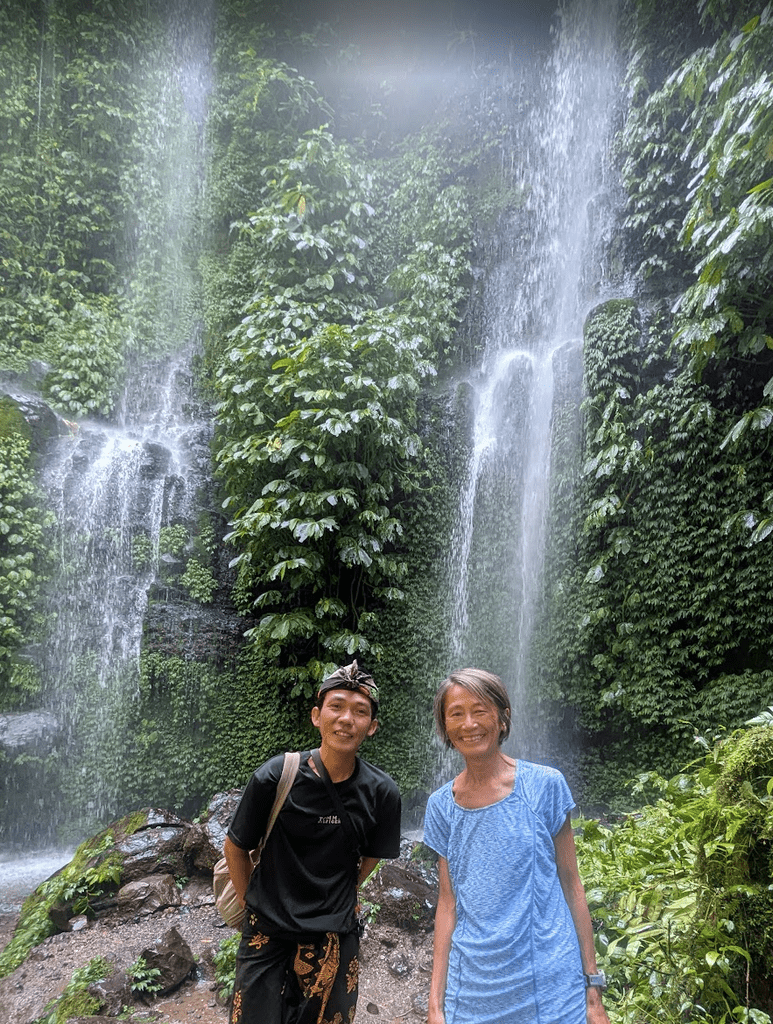
Benang Stokel – benang is “thread” and “stokel” means “three” in the local Sasak language as it is made of three waterfalls cascading into one pool at the base. What was impressive about this waterfall was the interplay of light and water and the sound of the water crashing into the pool.
Benang Kelambu
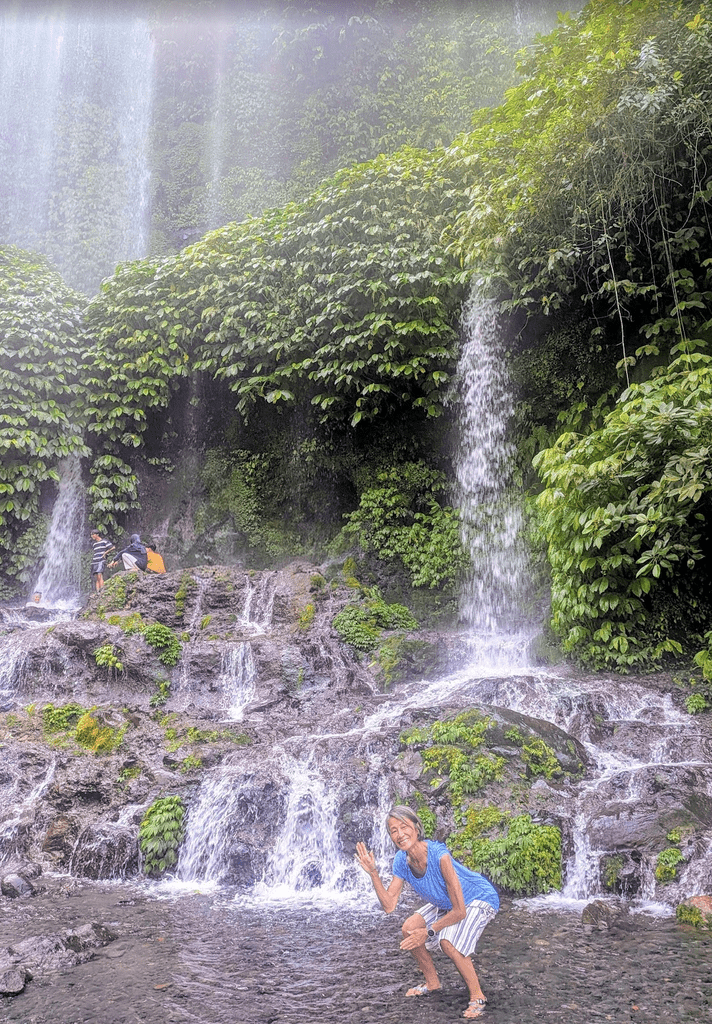
Benang Kelambu was a steeper 25 minute walk from Benang Stokel around paths that wound through the vegetation. Kelambu means “curtain,” in the indigenous Sasak language and once we arrived, I understood why it got the name.
It wasn’t one waterfall but a wide net of thin cascades looking like a thin veil through the vines. These gave way to short waterfalls and some manmade pools. While there were people swimming in those pools, I waded in the water and found it way too cold for my comfort.
My guide and I stopped at a small stall selling hot coffee and snacks and for once, the hot coffee felt warming given the chill of the water.
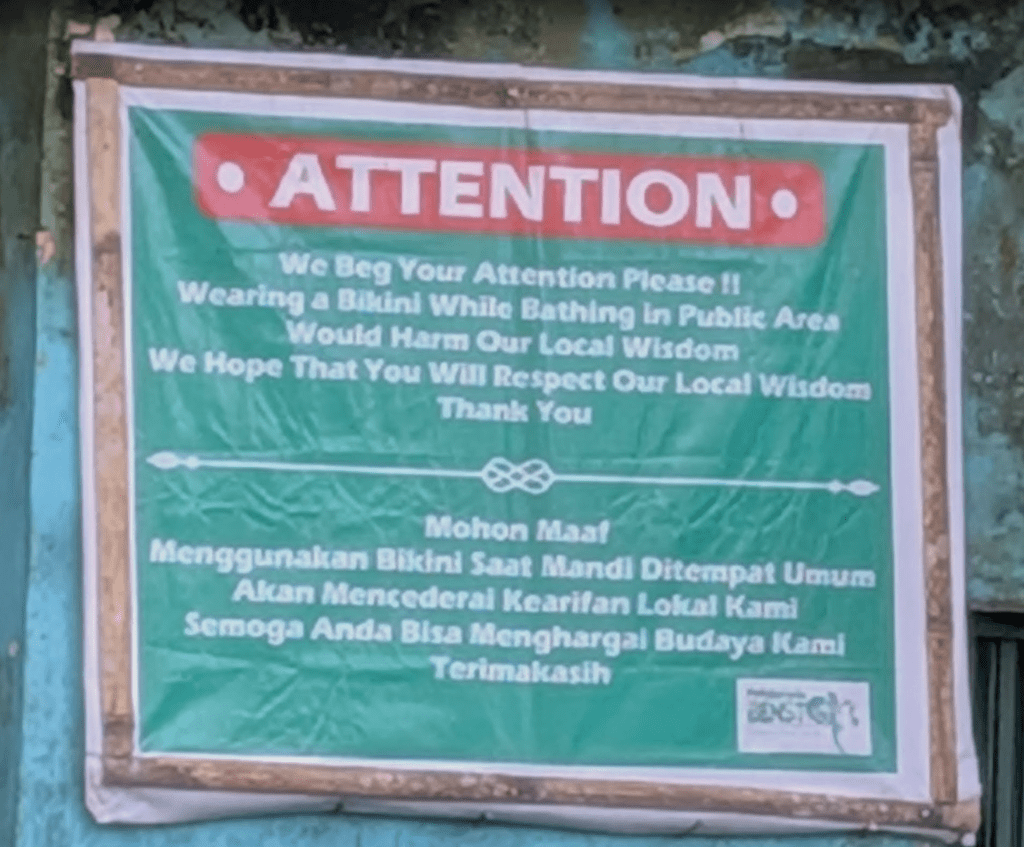
There was a sign next to the pools (see photo below) reminding visitors they are guests in a conservative Muslim island and what constitutes appropriate swimwear. I’m sure that’s a reason why the sign was put up. I later asked Hans about it and he sighed and said “sometimes visitors forget that our culture values modesty. We don’t want to be Bali” and left it at that.
Between getting to Benang Stokel, the steep climb to Kelambu and then coming all the way back, my Garmin clocked 71 flights of stairs. In humidity. On uneven trails. In areas where there should be railing but are none.
But this is why I’m doing this kind of travel – dirt trails and taking the steps down are not the easiest on my knees. But I can still do it and I intend to keep doing it as long as I can. At some point, I won’t be able to.
Village “Visits”
After the waterfall trek, we stopped by a “traditional Sasak village” attraction to view their woven roofs and clay houses. I didn’t enjoy it very much as it felt very “disney-fied”. The first sign: a large parking lot where mini vans and buses were pulling up and dropping people off.
As you entered the village, you paid a “entrance fee “voluntary donation” to the village. For that, you get to walk through a village that still houses 300 families. But honestly, it felt like the front porch of every home was selling the same beaded jewelry, woven cloth scarves, sarongs and bags. If I were a villager, I’m not sure how I would feel about the daily intrusion into my home with strangers peering through the windows hoping to glimpse “authenticity”
I had anticipated a more peaceful walk through a “real” village but thinking about it, it isn’t realistic to expect that when visitors (both domestic and international) descend upon your village.
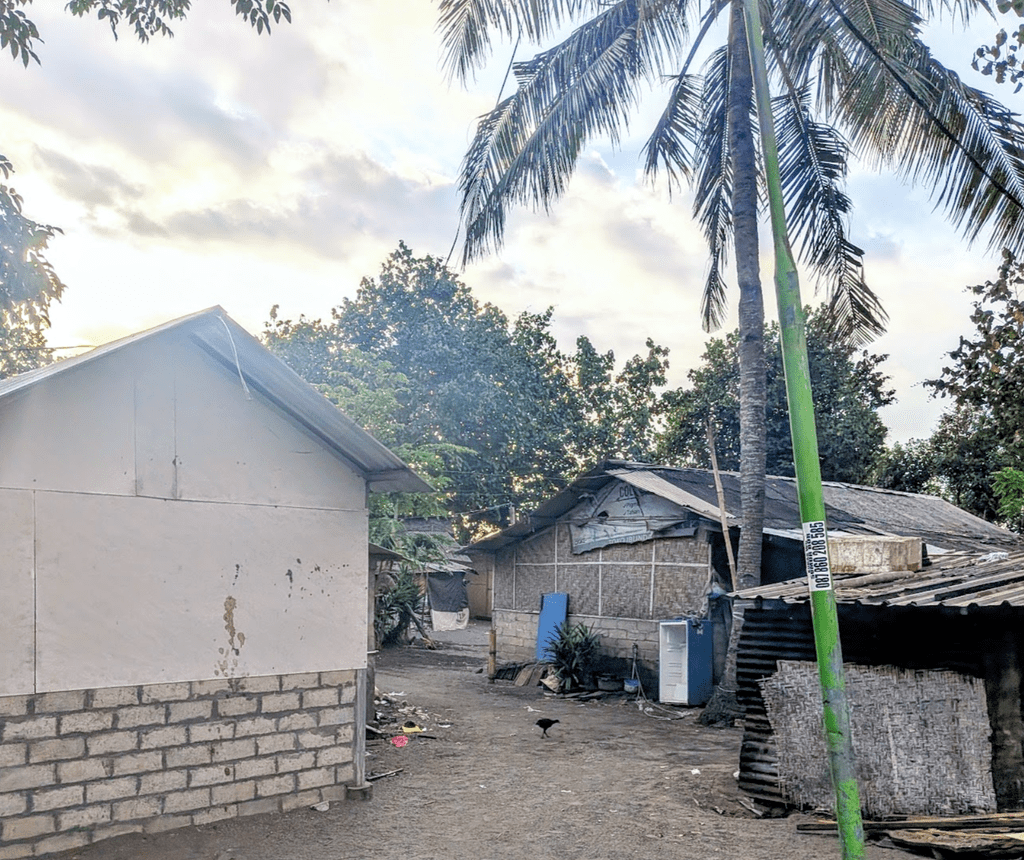
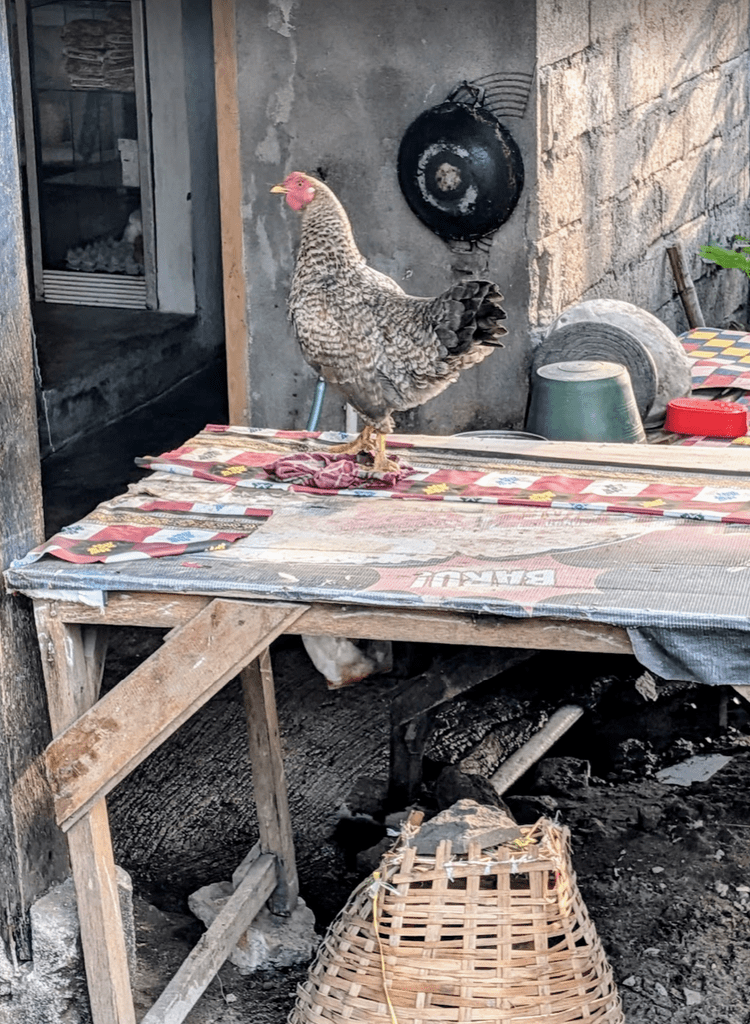
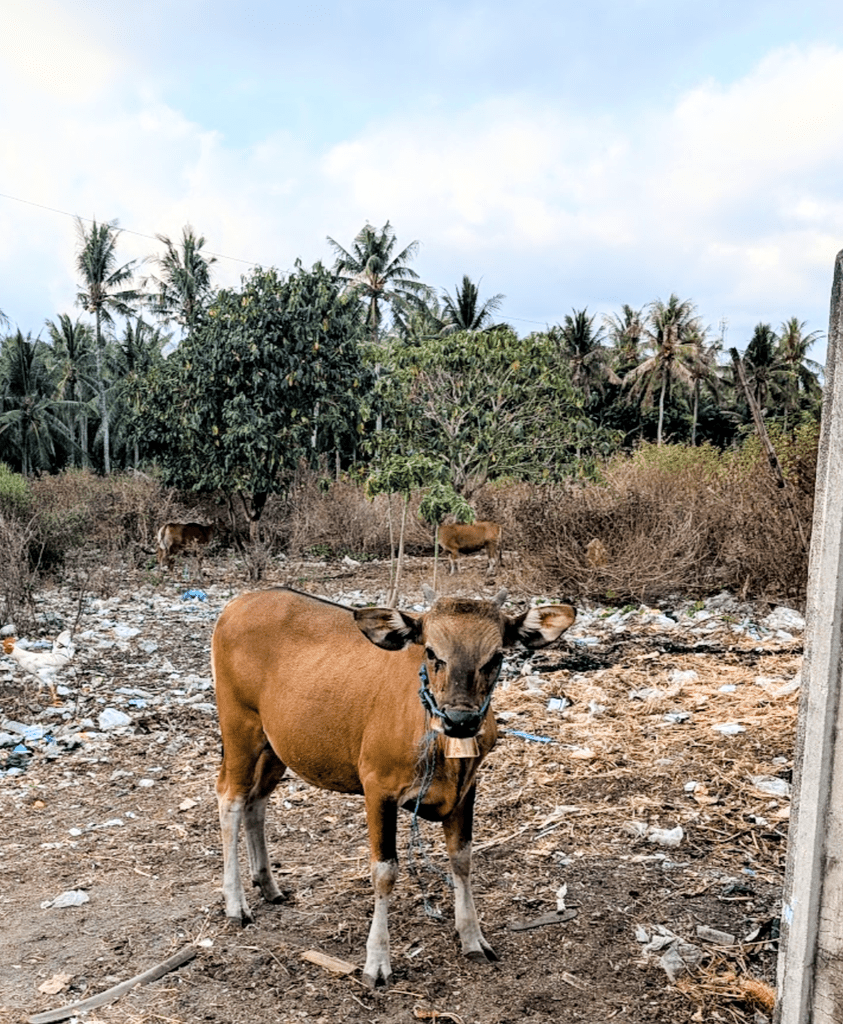
In contrast, the walk I took after my beachside stop a couple of days earlier through a village where people were just living their daily lives was much more interesting. No souvenirs, nobody telling visitors they were preserving tradition. It was just the animals sharing space among children playing (or teens on their phones watching the latest Tik Tok video), the woman washing her clothes in a basin which provided me with a much better idea of what life today for some people in Lombok is like.
Some scenes from my village walk
Lombok Islamic Center NTB
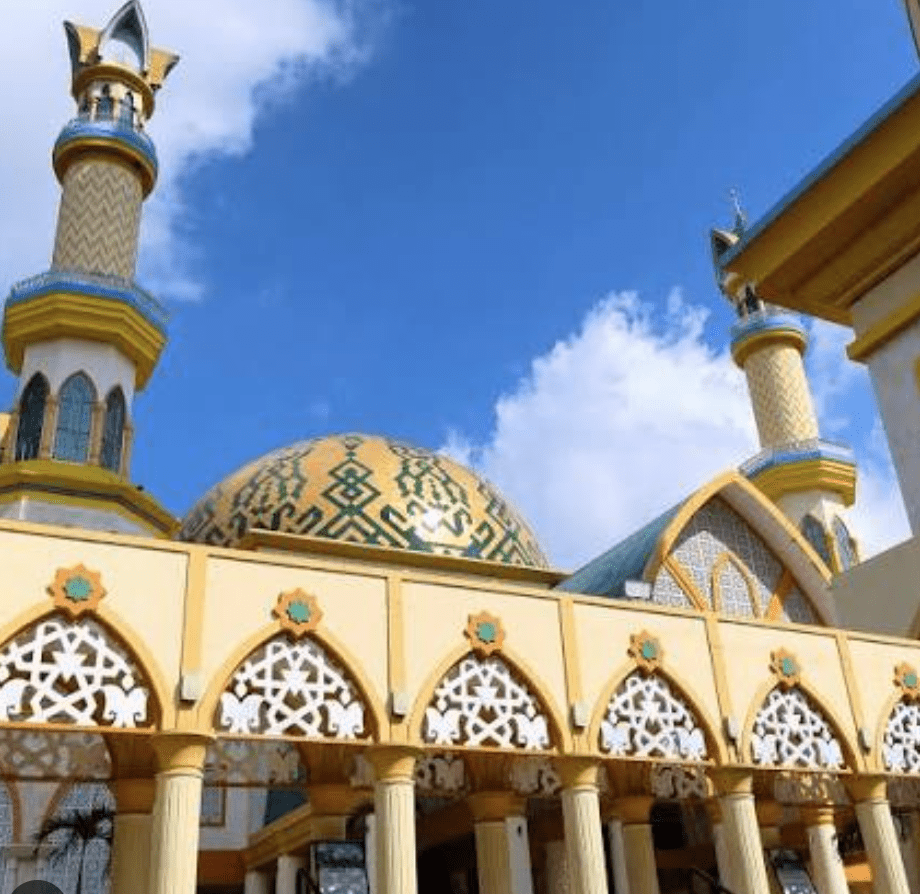
On our way back to Senggigi, we stopped by Lombok’s largest mosque, the Lombok Islamic Center NTB located in the center of Mataram.
Lombok is known as the land of a thousand mosques and you can hear the call to prayer everywhere five times a day and this mosque is the crown jewel of Lombok. (Note: when booking a hotel, look on Google Maps to see where the nearest mosque is. If it’s within a block of your hotel, bring ear plugs if you’re a light sleeper).
The Lombok Islamic Center looks like it came right from a fairy tale with its massive main dome surrounded by four smaller domes and the accompanying minarets. In fact, the mosque is so large that it accommodates 15,000 worshippers. I didn’t go inside but walked through the hallways that surrounded the main courtyard.
Sampling Roadside Food
Commercialized traditional villages on island tours aren’t for me but the food…. the food!! Some of the best comes from stalls specializing in one dish and one dish only and Lombok didn’t disappoint!
Nasi Balap Puyang
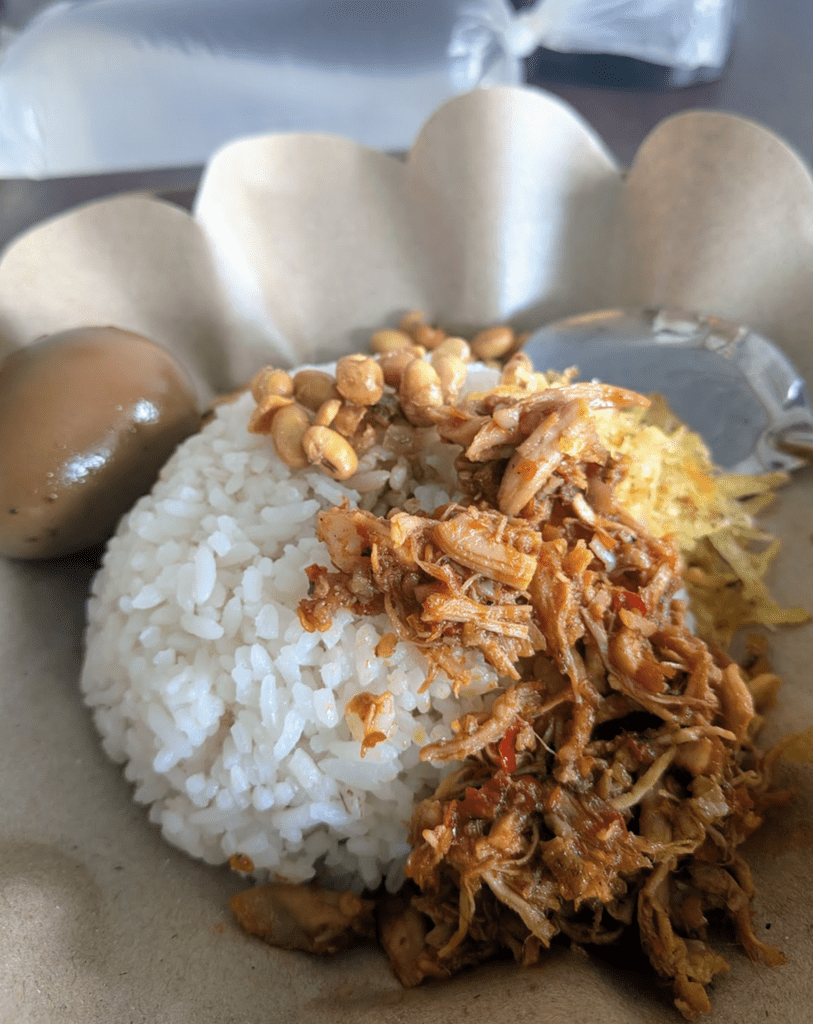
After the waterfall visit, I was ready for a snack so Hans pulled into a cafe serving nasi balap puyang , a local Sasak specialty consisting of white rice served with spicy shredded chicken, crispy fried soybeans and potato sticks.
When it arrived, I was a bit skeptical. But I was quickly proven wrong. The crunchiness of the soybeans contrasted with the aromatics and complex spices of the shredded chicken and vegetables.
My mouth is watering even as I write this. Cost? US$0.56 / EUR 0.49.
Tahu Tek Tek
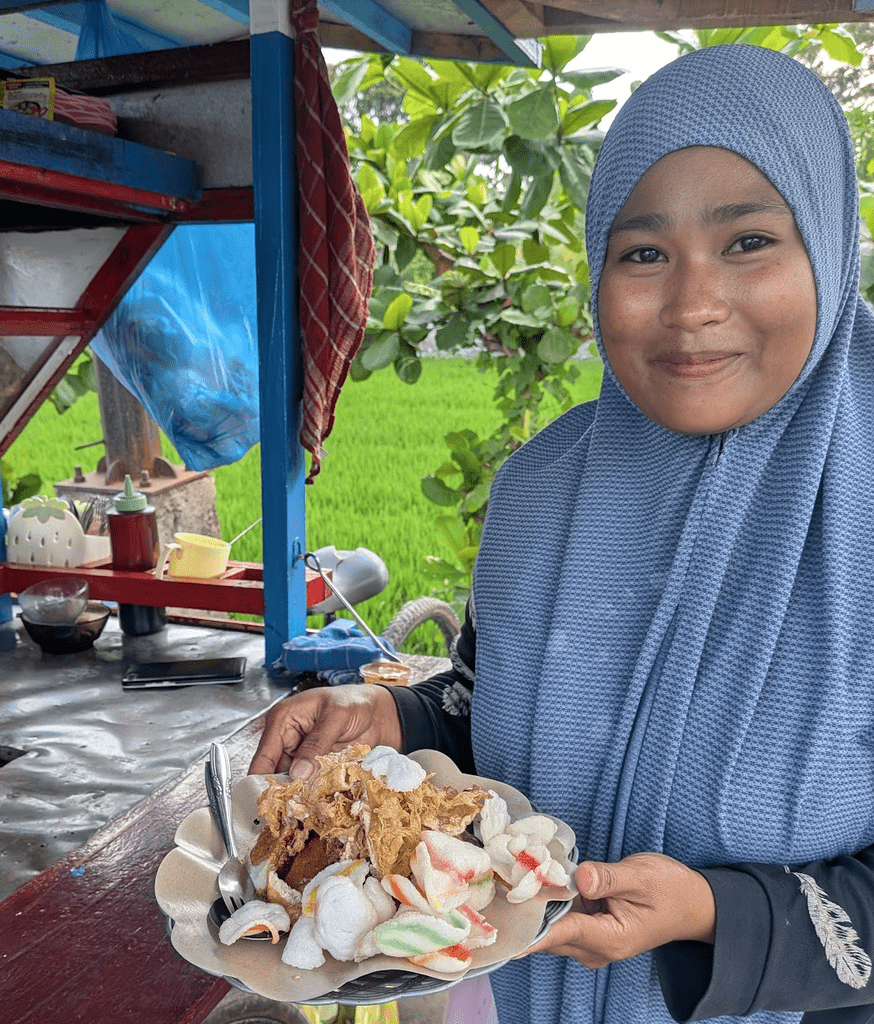
As we were ready to make our way to the Islamic Center, Hans pulled over to the side of the road where there were several food carts advertising tahu tek tek.
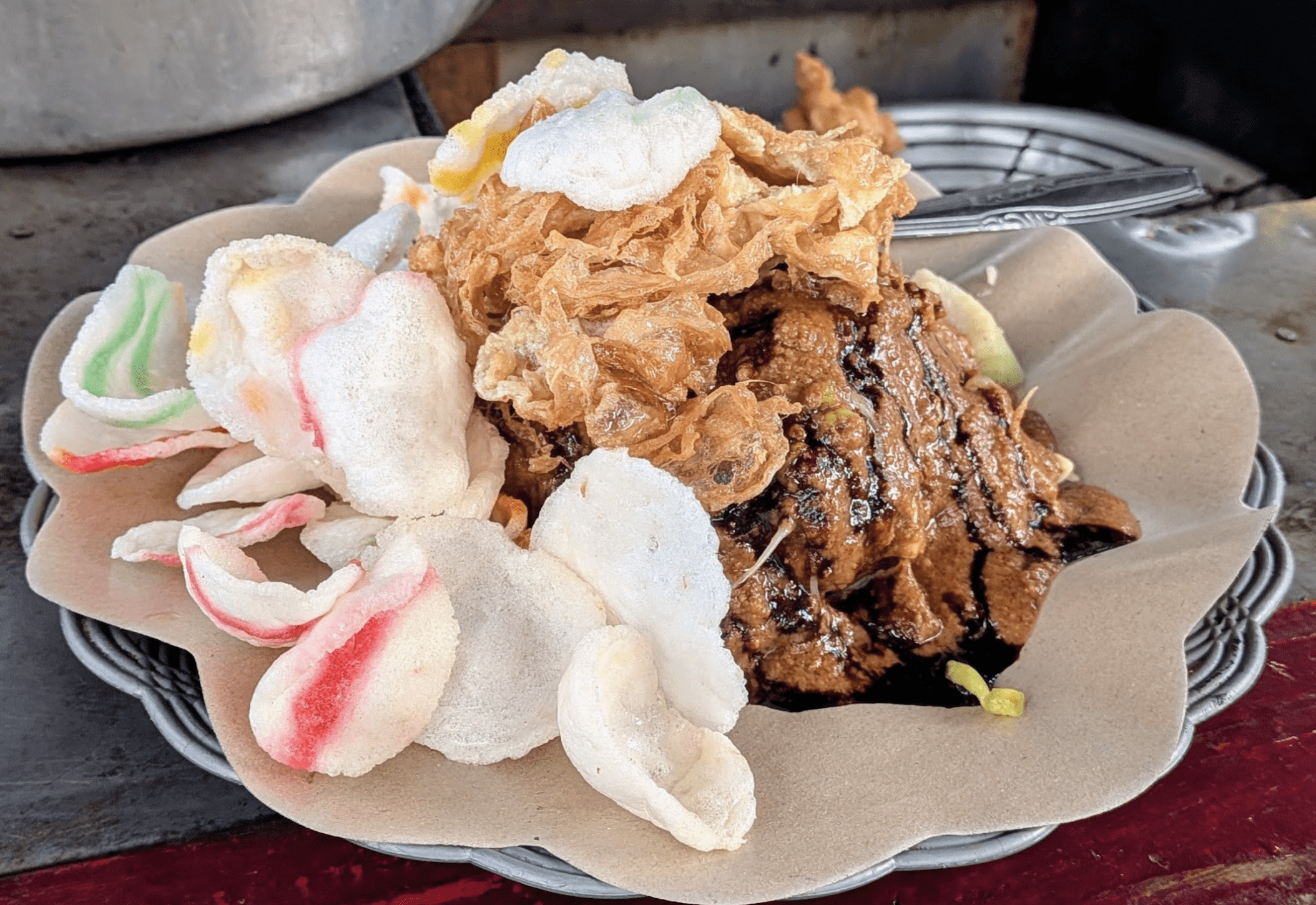
You may not be a fan of tofu – the bland, rubbery and waterlogged blocks sold at the supermarket. You might change your mind after trying tahu tek tek.
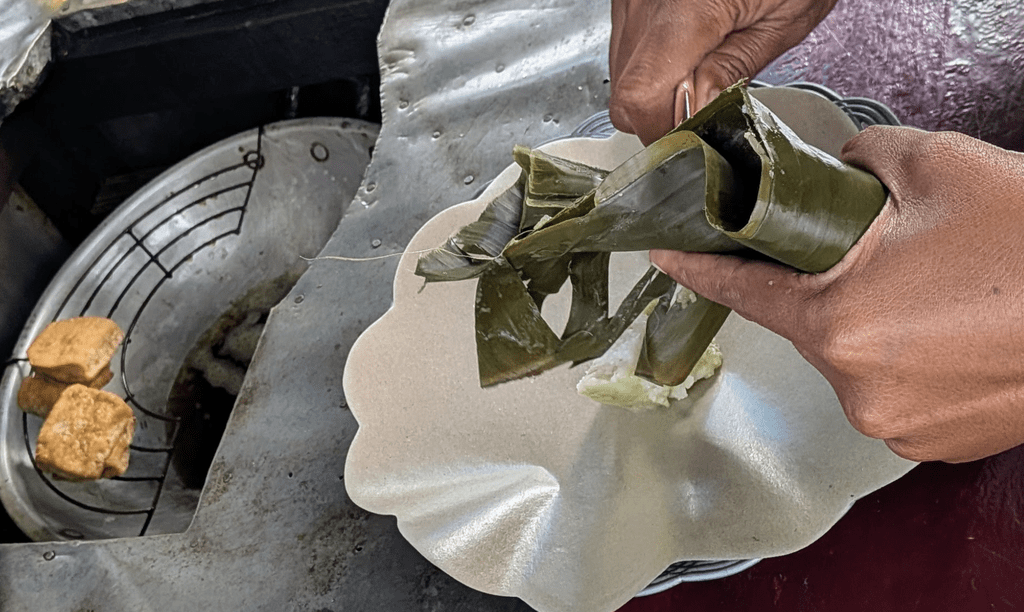
The young woman unwrapped a bamboo leaf containing lontong (pressed steamed rice) and sliced up the rice into bite-sized pieces. Then she dropped a block of tofu into hot oil until it was crisp along with a beaten egg so that it puffed and bubbled. Once they were done, she took a pair of scissors and cut up the fried tofu and egg
Finally, she sprinkled some bean sprouts and cucumber slices, poured peanut sauce and garnished it with tapioca crackers.
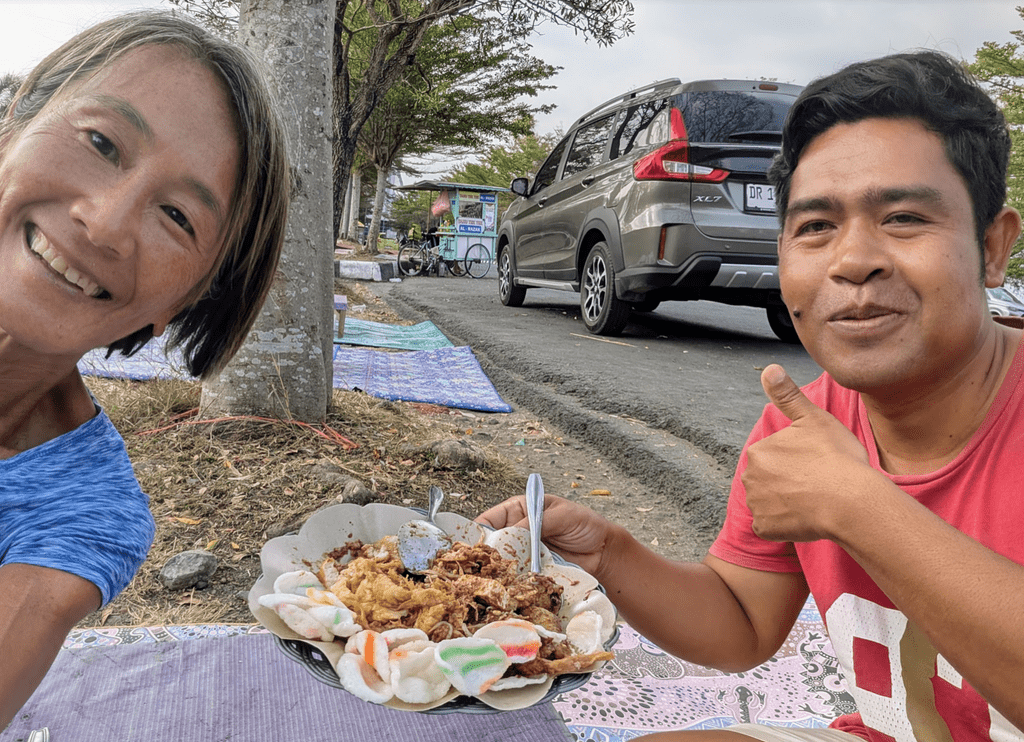
Sitting on a tarp laid out by the side of the road, Hans and I dug into this, mixing the peanut sauce with the crisp tofu and egg and vegetables. While simple, the flavor combinations combined with the fact that we were sitting on the side of the road overlooking rice fields made this a special snack.
Sate Rembiga
As we headed back to Senggigi, Hans made good on his promise to stop and let me try the sate rembiga I had glimpsed earlier in the morning.
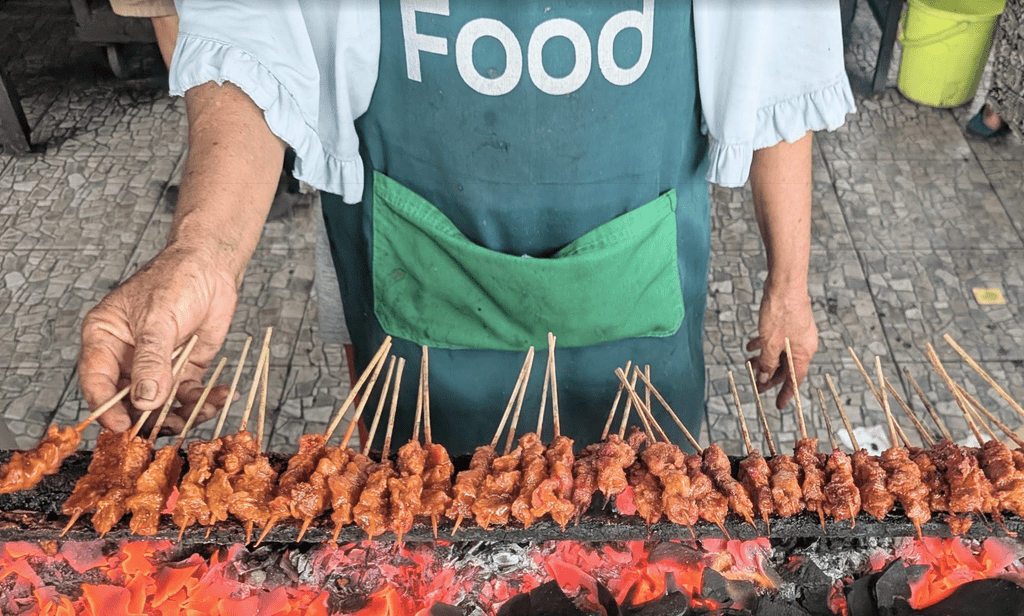
Sate rembiga is named after Rembiga village and is made of tender beef that has been marinated for hours in a blend of local chili peppers, garlic, shallots, shrimp paste (terasi), candlenut, and palm sugar. Unlike most sate, it’s served without peanut sauce, letting the spicy and bold flavors come through the beef itself.
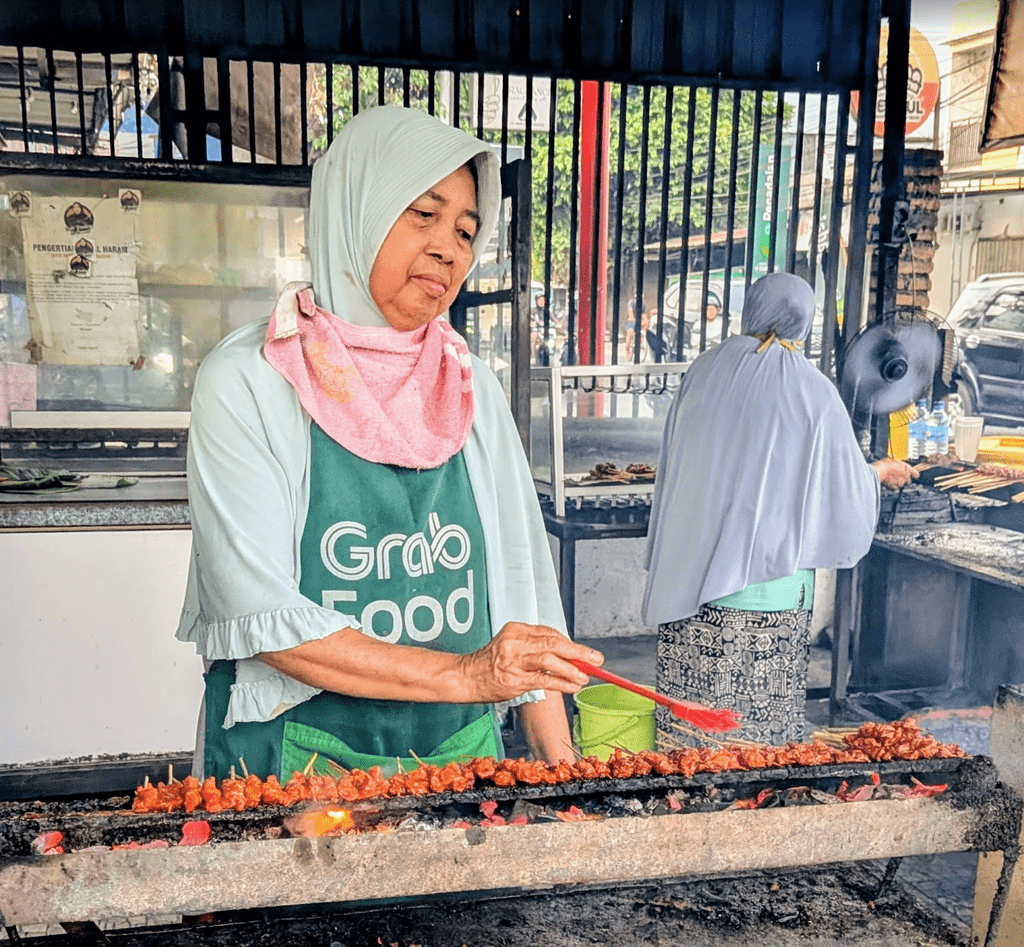
Hans pulled over to a place crowded with people waiting for their orders of sate to come off the grill. As I walked from the parked car across the street, I could smell the beef threaded on bamboo sticks being deftly moved and turned by two women.
After having eaten the tahu tek tek just recently, I was too full to eat again but of course I had to try this famous Lombok specialty so I asked for the sate to go.
The woman smiled and quickly gathered up my sate sticks, wrapped it in brown paper and thew in a couple of bamboo leaf wrapped rice cakes and handed me a bag. Cost? 30,000 Indonesian rupiah or about US$1.70 or EUR 1.49.
After a day of waterfalls, villages, mosques and roadside food, taking the sate back to my room, opening up the parcels of pressed rice lontong , savoring the complexity of spices and perfect amount of char of the beef and washing it down with a local Bintang beer seemed like the right end to my day. Eating something that I had spotted that morning from the back seat of Hans’ car.
After basing myself in Senggigi for 5 days of relaxing, doing some activities and touring the island , it was time to move on.
Next stop: Kuta Lombok.